entrusted with a ministry of reconciliation
Pastors become peacemakers during George Zimmerman trial
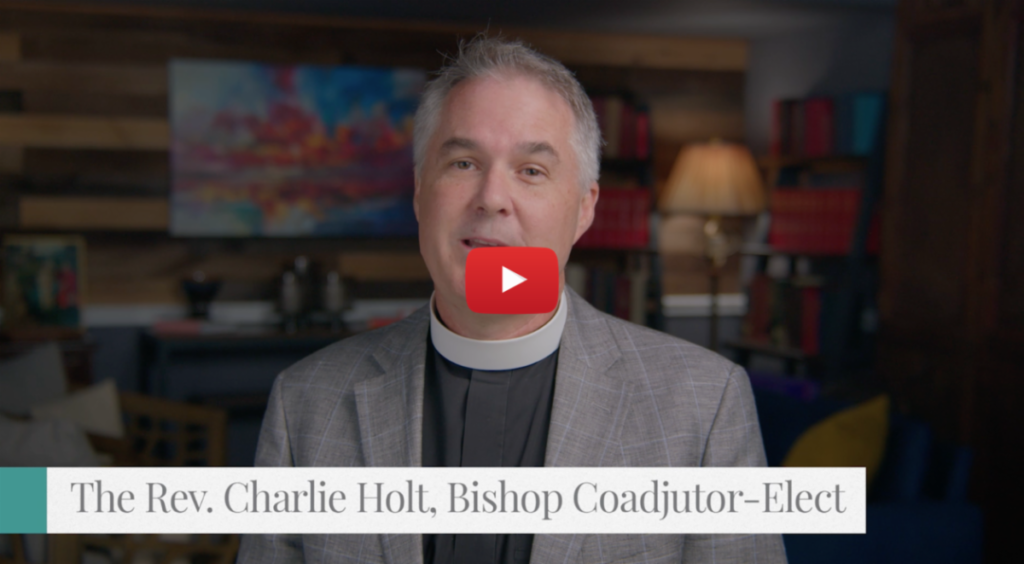
“Tragedies happen, violence happens in every community,” said Holt. “The difference is how does a community responds.”
http://www.clickorlando.com/news/pastors-become-peacemakers-during-zimmerman-trial/-/1637132/20460688/-/8hfvmwz/-/index.html
Still healing, Sanford braces for George Zimmerman’s trial
Excerpt from Larger article:
…Part of that strategy has been turning to the city’s spiritual leaders to defuse simmering racial tension and guide the city to reconciliation. With the start of the trial, they will add courtroom observer to their role. About a dozen pastors, part of a larger group of clergy, are working with the U.S. Department of Justice and Seminole County Sheriff’s Office, and will attend the trial each day, then report back to their congregations and the public. The pastors, representing an ethnic and denominational cross-section of the area, will rotate among four reserved seats in the courtroom.
“We are going to be a witness, watch how the system works, watch the case unfold and share that,’’ says Rev. Charles Holt, of St. Peter’s Episcopal Church in neighboring Lake Mary. “The role of the clergy in this case is to call on the community to be responsible in its response. This case and trial has the ability to divide.”…
…Holt said he is hopeful the public, from Sanford or elsewhere, will respect the verdict.
“This trial will either divide our community or bring us together,’’ Holt said. “We can let the demons rule or the better angels rule. We have to make the choice.’’
Read more here: http://www.miamiherald.com/2013/06/08/v-fullstory/3440736/the-healing-of-sanford.html#storylink=cpy
Charlie Holt & Marcus Borg discuss Jesus’ Resurrection at Rollins College

Dr. Marcus Borg and The Rev. Charles Holt discuss the historic nature of the Resurrection of Jesus on the Campus of Rollins.
The public forum was held on February 7, 2013.
Related Article: Being Skeptical of the Skeptics: A Critique of the Jesus Seminar
The Bible Challenge


The Bible Challenge is currently recording teachings to correspond with the Bible Challenge Readings. Check back often to recieve the latest installment.
This weekly teaching overview contains a downloadable study guide and an audio lecture on each week’s readings in the Old and New Testaments. The lessons run about 30-40 minutes in length. The teacher is The Rev. Charlie Holt of St. Peter’s Episcopal Church in Lake Mary, FL.
The Study of the New Testament
The weekly teaching focuses on going deeper in the New Testament readings of the Bible Challenge. There is a downloadable study guide and audio lecture (just over 1hr in length). This study is taught by The Rev. Charlie Holt of St. Peter’s Episcopal Church in Lake Mary, FL.
Being Skeptical of the Skeptics: a Critique of the Jesus Seminar

The following was published in the May, 2011 Central Florida Episcopalian
The recent Jesus Seminar course advertised in the Central Florida Episcopalian underscores the need for the clergy and laity within the Diocese of Central Florida to be wise and discerning in the matters of our common Christian faith and life. From the ad in the April 2011 CFE, headlined, The Quest for the Historical Jesus: “The Gospels portray Jesus as the Messiah and divine savior. Within the Gospels, however, we can glimpse another Jesus, a Jewish teacher and healer with a radical vision of the kingdom of God. The search for the historical Jesus examines the Gospels in order to discover who Jesus was before he became the object of Christian belief.”
The basic premise of the Jesus Seminar scholars is that the “Jesus” that the Church worships and follows in life practice is a different Jesus than the actual flesh and blood person who walked the Earth 2000 years ago. The basic charge from the Seminar is that the later followers of Jesus mythologized the figure of Jesus in order to create a religious theological system called Christianity and an institution called the Church.
On face value, the basic premise of the Jesus Seminar’s teachings sounds quite plausible especially to our modern minds which have been thoroughly schooled in materialistic secularism. The modern mind has no categories for the miraculous, the mysterious or the supernatural.
The Seminar’s teachings often find a sympathetic audience for another reason. There is a general skepticism in the culture with institutions in general but especially the institutions of the Christian Church. This is not entirely without good reason. Turn on the news and we are shown a pastor in Gainesville burning Qurans; priests and bishops being sued for a pedophile scandal; and prominent Christian leaders caught in extra-marital affairs. A recent research study titled UnChristian concludes that “An overwhelming percentage of non-Christians sampled said they perceived Christians as judgmental, hypocritical, too political, and antihomosexual, among other things.”
The media rarely reports on Christians feeding the homeless, teaching the next generation in Christian schools and ministering to the sick and dying. If it bleeds it leads. The institutional Church has many self-inflicted wounds which make the headlines. So the claims of the Jesus Seminar that the institutional Church has gotten it wrong for two millennia about the “real” Jesus resonates in a secular society already skeptical of the Church.
To be honest, institutional churches have at times been wrong in teachings and doctrines. The Protestant Reformation is a good example of a period in Church history where scholars and theologians challenged the institutional Church to reform its teachings to bring them back into conformity with the teachings of Jesus and the Apostles. Martin Luther, John Calvin, Thomas Cranmer and others were willing to be branded as heretics, even to put their lives on the line in order to challenge what they perceived to be corruptions in teaching and practice by the institutional Church.
Episcopalians are the heirs of that rich protestant heritage of questioning our catholic institution. As Protestants, we are always seeking to reform and renew our beliefs. In our prayers for the Church, the Book of Common Prayer provides the petition: Gracious Father, we pray for thy Holy Catholic Church. Fill it with all truth, in all truth with all peace. Where it is corrupt, purify it; where it is in error, direct it; where in anything it is amiss, reform it. Where it is right, strengthen it; where it is in want, provide for it; where it is divided, reunite it; for the sake of Jesus Christ thy Son our Savior. Amen.
Following the teachings of the Jesus Seminar, bishops and clergy like the Rt. Rev. Jack Spong have fashioned themselves as the Church’s newest protestant reformers. They are calling into question the long standing creedal and doctrinal teachings of the Church on the bodily resurrection of Jesus, the divine nature of Jesus, the efficacy of prayer, the reality of heaven and hell, the promise of a second coming of Jesus, the necessity of faith in Jesus Christ for salvation, the Cross of Jesus as an atonement offering for the sins of the world, and so on.
One of the workshops offered at the seminar event last month was titled What Jesus Wasn’t and the Kingdom Isn’t. The website promoting the workshop asserted: “The followers of Jesus exchanged the vision for the visionary. They elevated Jesus to godhood, interpreted his death as a blood sacrifice, and organized Churches. Christianity eventually constructed an all-encompassing official theology with the divine Jesus at its center. This workshop tells how this happened, assesses its costs, and explores modern options for thinking about God that take the historical Jesus seriously.”
So, has the Church been wrong about Jesus all these years? Was the “historic” Jesus merely a man who not only lived and died as one of us, but never really walked on water, calmed the storm, fed the five thousand, died on a cross for our salvation, or bodily rose from the dead? Was all of that made up by the Church, a form of religious mythology? Is Jesus merely an inspiring historic figure, but nothing more? If the Jesus Seminar’s critique is correct, one is left wondering what is the point of continued participation in the Church? Indeed, many people have come to accept the skeptical teachings of the Seminar through the years and as a result have wandered away from life in the Church.
The Jesus Seminar is perhaps most famous for its gatherings of scholars to vote on the sayings attributed to Jesus in Gospel texts using various colored beads placed in a basket to register their individual degree of certainty or skepticism that the words authentically represent the historic Jesus. The voting system has been roundly criticized by many scholars, such as N.T Wright, author of Jesus and the Victory of God, for its use of a weighted average that favors ruling a saying of Jesus to be inauthentic. Wright muses, “I cannot understand how, if a majority … thought a saying authentic or probably authentic, the ‘weighted average’ turned out to be ‘probably inauthentic’.”
The Seminar itself which is self-selected vastly under-represents the multitude of New Testament scholars around the country that affirm the basic historic accuracy of the Gospel records. Thus the results of their voting are biased toward a skeptical reading of the Gospel texts in favor of non-Canonical texts such as the “Gnostic Gospels”. Many have questioned whether the Jesus Seminar seems at times more motivated by a desire to say something controversial which might land them a media appearance on the latest made for TV Easter or Christmas documentary.
One of the most important things to know about the methodology of the Jesus Seminar is their prior assumptions. The Seminar has created many different criteria that govern whether they will determine that a saying of Jesus is authentic or inauthentic. Raymond E. Brown in An Introduction to the New Testament is critical of the methodology: “It [the Jesus Seminar] has operated to a remarkable degree on a priori principles, some of them reflecting an anti-supernatural bias. For instance the bodily resurrection had no real chance of being accepted as having taken place. The session dealing with the authenticity of Jesus’ predictions of his passion and death was dominated by the initial refusal of most of the participants to allow the possibility that Jesus could have spoken of his impending death by virtue of “super-ordinary” powers; accordingly they voted black (he did not say it) on eleven Synoptic passion predictions.”
A text such as John 14:1-14: “I am the way, and I am the truth, and I am life”, cannot be an authentic saying because it has Jesus referring to himself. Robert W. Funk, founder of the Jesus Seminar writes: “It is unthinkable…that Jesus said many of the things he is reported to have said. He certainly did not make claims for himself. To have done so would have contradicted his fundamental disdain for arrogance and hypocrisy and run counter to his rhetorical strategies. Sayings like those we find in the fourth Gospel could not have originated with Jesus.” But why could not Jesus have referred to himself? The circular logic is that Jesus would not have said such things so he certainly did not say such things—says Funk.
It is not surprising then that the “historic” Jesus whom the Jesus Seminar reconstructs closely reflects their prior assumptions. Luke Timothy Johnston, author of The Real Jesus, remarks that their conclusions were “already determined ahead of time,” which Johnston says is “not responsible, or even critical scholarship. It is a self-indulgent charade.” And Brown concludes, “The question has been raised whether once again, as with the discovery of the liberal Jesus in the last century, the quest [for the historic Jesus] is not producing the Jesus the quester wished to find.”
And just who is the Jesus Seminar’s Jesus? He is a wise peasant, a Jewish cynic, a faith healer who is committed to a social reform ministry on behalf of the poor and marginalized. But, he is a Jesus who does not see himself as God in the flesh, who does not have the aim of creating a continuing community called the Church after his death, who does not provide any theological significance to his death, or anticipate his eschatological return. This Jesus most certainly did not bodily rise from the dead.
The other founder of the Jesus Seminar, John Dominic Crossan, goes so far as to say that after Jesus body was taken down off the cross (if it even was) it was most likely thrown into the town garbage heap to be eaten by carrion and wild dogs or buried in a mass grave. For Crossan, the resurrection of Jesus is a faith experience on the part of the early Church, not a historic reality.
Brown summarizes the many “bluntly critical” writings about the Seminar: “One finds therein such devastating judgments as: methodologically misguided; no significant advance in the study of the historic Jesus; only a small ripple in NT scholarship; results representing the Jesus the researchers wanted to find; the pursuit of a specific confessional agenda; and dangerous in giving false impressions.” Such critiques come from a wide range of New Testament scholars from faculties such as Baylor, Duke, Emory, Yale, Catholic University, and Wake Forest.
The leaders of the early Church also were very critical of false prophets and teachers. The writers of the New Testament anticipated that there would come a day in which false teachers would slip into the common life of the Church and question the eye-witness testimony of the Apostles and the Commandment of the Lord Jesus. “But there were also false prophets among the people, just as there will be false teachers among you. They will secretly introduce destructive heresies, even denying the sovereign Lord who bought them—bringing swift destruction on themselves. Many will follow their depraved conduct and will bring the way of truth into disrepute. In their greed these teachers will exploit you with fabricated stories.” (2 Peter 2:1-2)
The people of God must always be prepared to discern between true and false teaching—even within our own diocese. There are plentiful reasons why someone might want to deny the historicity and accuracy of the Gospels. Some motivations are seemingly selfless (for example, a desire to be non-judgmental, and all-inclusive). However, the main reason often proves itself to be one of hardness of heart and stubborn willfulness. The challenge of Jesus is his sovereign Gospel summons to the Kingdom of God which calls all people to repentance and obedience of faith in the Messiah, the Christ. In pride, human beings do not want to submit to a higher authority, especially one that challenges them to renounce self. Jesus Christ is the King of Kings and the Lord of Lords. Jesus’ bodily resurrection from the dead in time and space vindicates him in his lordship. The resurrection provides to those who trust in Jesus name a historic guarantee of salvation from sin and death and a tangible foretaste of new life in the coming Kingdom of God.
Those who deny the faith given to us by Jesus Christ and his Apostles harm not only themselves, but of greatest concern is the harm they do to those who follow them. Be skeptical of the skeptics. Those who question the Lord need to be questioned themselves. Jesus calls us to trust and obey.
How to deal with sin within the Body of Christ

Related Sermons:
Matthew 18:15-20 If your brother or sister sins against you 9/4/2011 (sermón en español)
Matthew 18:21-35 The Parable of the Unmerciful Servant 9/11/2011 (sermón en español)
Whenever two or more sinners are gathered together, conflict is in the midst of them.
Jesus called people from all manner of life into the Kingdom of God. He was criticized for welcoming tax collectors, prostitutes, the demon possessed, lepers, gentiles, gluttons and drunkards into the kingdom of God!
With such a motley band of brothers and sisters, it does not take much imagination to envision that the full range of bad behaviors and habits would manifest within the community of the early church in short order. One of the critical challenges for Jesus’ “little flock” was to sort out how to maintain a holy, growing, united community made up of broken hurting sinners. Jesus provided direction to his church.
Is it any different in our day? The church is not a refuge for saints but a hospital for sinners. As sinners, we inevitably will hurt one another. When (not if) that happens, what are we to do? How are we to respond? Often I see that when a person is hurt by a brother or sister in Christ, they quietly withdraw from the relationship. Jesus would not have us separate because of sin, rather to pursue restoration and be sanctified.
In Matthew 18, Jesus teaches us that conflict and the occasion of transgression is an opportunity to grow in relationships and in holiness of life. We are accountable to one another. The occasion of sin within the body of Christ becomes a moment where we manifest to one another the grace that God has abundantly given us.
“If your brother or sister sins, go and point out their fault, just between the two of you. If they listen to you, you have won them over.” –Matthew 18:15
Jesus gives us several values in Matthew 18:15-35:
Value #1 Respect the dignity of the sinner
Do not tell church first; that would be gossip and slander. Rather, Jesus would have us first deal with sin as a private matter. This allows the unity of the body to be protected. A private conversation allows the sinner to recover quickly without having a “big deal’ made of their transgression. The vast majority of sins within the body can be dealt with privately in a one-on-one communication.
Notice Jesus says, “go to your brother”… Email and text messages are not the appropriate medium to have these types of discussions. They are best held face to face, person to person—just between the two of you.
Value 2: The aim is always to regain your brother or sister.
Often people avoid tough conversations because they are afraid of what will happen to the relationship. Sometimes we may have to be willing to lose a relationship to loved one, in order to regain our brother or sister in a healthier relationship. While it is to a person’s credit to overlook and offence (Proverbs 19:11), at other times to not confront is to not care. Sin is destructive of people, relationships and the church. Our goal in any confrontation is to “win our brother or sister”. Notice he does not say, “you have won the argument!” The highest value is winning the person.
Value #3 begin with gentleness and gradually work toward a more severe mercy
Doctor’s don’t choose the most invasive surgery first when treating a patient. And we should be gentle in our approach to dealing with sin in another’s life. Jesus teaches the steps; first confronting one-on-one. Then, if that doesn’t work, take along one or two witnesses. If that doesn’t work, involve the authorities of the church.
Some people attempt the one on one and find the confrontation ineffective. That doesn’t mean it is time to give up. Jesus gives us a range of assisted approaches to help restore the sinner and the broken relationship. When individual attempts at reconciliation fail, enlist the help of others in the church or your pastor. Some sins are as deep as a person’s childhood, some are due to severely hardened hearts, and a more severe mercy is needed to see heart change.
Value #4 Don’t write off a brother or sister in Christ as a “lost cause”.
We read about an excommunication of a brother in 1 Corinthians 5. While Paul encourages the congregation that the man should be “put out of their fellowship” for his immorality, the church discipline was done to hand the man over to Satan to experience the consequences of sin, “so that his spirit may be saved on the day of the Lord.” (1 Corinthians 5:5)
No one is a lost cause. We never know how God will work in a person’s life and heart. Do not be surprised if God calls us to forgive another as a testimony to the power of the gospel.
Value #5 The sweetest moments of Christian fellowship come after sin and reconciliation.
Jesus promises that he is present in the midst of “two or more” who gather in accountability. While these conversations are difficult, they are also holy, sacred ground. Jesus desires to see the people who he has called together become healed and restored by his grace. We have been entrusted with a ministry of reconciliation as the church.
Value #6 We are to demonstrate God’s grace with one another.
As the disciples contemplate Jesus teaching about speaking the truth in love to the sinner, they wonder how many times must they be willing to go through this process of restoration? Is there a statute of limitations or a seven strikes and you’re out rule? That would seem reasonable! But Jesus does not accept such a small display of grace. Jesus answered, “I tell you, not seven times, but seventy-seven times.” (Matthew 18:22)
Jesus goes on to tell the story of the unmerciful servant who was forgiven a debt he could never repay. Incongruantly, the servant was then unmerciful to a fellow servant who owed him a not insignificant amount of money, though nothing in comparison to the debt he had been forgiven. God expects us to be ambassadors of his grace to one another, in light of his abundant forgiveness to us. As we pray in the Lord’s Prayer, “forgive us our trespasses, as we forgive those who trespass against us.”
Is there someone in your life with whom you have a problematic relationship. How would Jesus encourage you to respond to the challenge? Sadly, in this sinful and fallen world not every relationship is salvaged and restored after sin. But one of the sweetest promises in the Bible is the promise of Jesus presence when two or more come together in unity and restoration. “Again, truly I tell you that if two of you on earth agree about anything they ask for, it will be done for them by my Father in heaven. For where two or three gather in my name, there am I with them.” (Matthew 18:19-20)
Sanford: The Untold Story

The black, hispanic and white pastors of Sanford continue to meet and build relationships and work on the racial issues. This video captures the spirit of some of the meetings that marked the beginning of that relationship in the wake of the Trayvon Martin shooting. The emphasis is on prayer, reconciliation and peacemaking. This good work is continuing to go on even though the cameras have stopped rolling.
Should Confirmation be Required?

Excerpt from a recent ENS article where St. Peter’s was interviewed….
Another education committee member, the Rev. Charles Holt, rector of St. Peter’s Church in Lake Mary, in central Florida, said he was relieved and grateful that “none of the resolutions passed General Convention.
Had they passed, theoretically, “all one had to do to be an elected leader at the highest levels was to have taken communion three times over the course of last year” or be a communicant in good standing, he said. “Conceivably, they could not believe in Jesus Christ as their Lord and personal savior and be a leader in the Episcopal Church.”
The conversation about confirmation is essential and a healthy one because “it makes us recommit ourselves and come to clarity about our core beliefs and wrestle with our faith,” said Holt.
Holt also believes confirmation “is actually the one thing a bishop can do to help grow the Episcopal Church. In the Episcopal Church, it’s the bishop’s job to make sure that every single person who’s a member of our church has made a mature profession of faith in Jesus Christ” – a moment he believes every Christian should experience.
“If we do away with confirmation then we don’t have that moment for people,” he said.
Making confirmation a powerful and personal moment is of utmost importance for Bishop Dorsey Henderson, who retired from the Diocese of Upper South Carolina in 2009. He now assists on behalf of Bishop Gregory Brewer of Central Florida at confirmations.
Henderson confirmed about 18 people at St. Peter’s Church on May 17, including eighth grader Grant Williams, 13, who believes “confirmation is very necessary.
“It felt like I was coming closer to God, like I was getting to know him better and confirming my faith in him by showing that I truly believed in him and wanted to follow him,” he said.
Henderson said he adds the names of each confirmand to a personal notebook he has kept over 15 years of the episcopacy. “I assure them that I will pray for them regularly by name and I ask them for their prayers.”
While confirmation “is not essential to receive the sacrament of Holy Communion … it provides a kind of spiritual boost” especially to those baptized as infants and those converting from other traditions, he said during a recent telephone interview.
Justin Martyr’s 1st Apology (Early Christian Liturgy 155 AD)

Other than what we read in the book of Acts (See Acts 2:42), one of the first descriptions of early church worship practices is found in Justin Martyr’s 1st Apology written around 155 A.D. It is an encouragement to know that Anglican/Episcopal congregations are still doing the exact same liturgical practices in the same order and manner he describes.
One of the issues that was debated at the recent General Convention was whether to give communion to the un-baptized, a novel practice called “open communion”. We see in this writing just how seriously the early church fathers took the administration of the sacraments. Also, of interest is the explanation of why we worship on Sunday.
Justin Martyr’s Apology: Chapters 65-67 (On Early Christian Liturgy and Sacramental Practices 150 AD)
excerpted from http://www.newadvent.org/fathers/0126.htm
Chapter 65. Administration of the sacraments But we, after we have thus washed him who has been convinced and has assented to our teaching, bring him to the place where those who are called brethren are assembled, in order that we may offer hearty prayers in common for ourselves and for the baptized [illuminated] person, and for all others in every place, that we may be counted worthy, now that we have learned the truth, by our works also to be found good citizens and keepers of the commandments, so that we may be saved with an everlasting salvation. Having ended the prayers, we salute one another with a kiss. There is then brought to the president of the brethren bread and a cup of wine mixed with water; and he taking them, gives praise and glory to the Father of the universe, through the name of the Son and of the Holy Ghost, and offers thanks at considerable length for our being counted worthy to receive these things at His hands. And when he has concluded the prayers and thanksgivings, all the people present express their assent by saying Amen. This word Amen answers in the Hebrew language to γένοιτο [so be it]. And when the president has given thanks, and all the people have expressed their assent, those who are called by us deacons give to each of those present to partake of the bread and wine mixed with water over which the thanksgiving was pronounced, and to those who are absent they carry away a portion.
Chapter 66. Of the Eucharist And this food is called among us Εὐχαριστία [the Eucharist], of which no one is allowed to partake but the man who believes that the things which we teach are true, and who has been washed with the washing that is for the remission of sins, and unto regeneration, and who is so living as Christ has enjoined. For not as common bread and common drink do we receive these; but in like manner as Jesus Christ our Saviour, having been made flesh by the Word of God, had both flesh and blood for our salvation, so likewise have we been taught that the food which is blessed by the prayer of His word, and from which our blood and flesh by transmutation are nourished, is the flesh and blood of that Jesus who was made flesh. For the apostles, in the memoirs composed by them, which are called Gospels, have thus delivered unto us what was enjoined upon them; that Jesus took bread, and when He had given thanks, said, “This do in remembrance of Me, Luke 22:19 this is My body;” and that, after the same manner, having taken the cup and given thanks, He said, “This is My blood;” and gave it to them alone. Which the wicked devils have imitated in the mysteries of Mithras, commanding the same thing to be done. For, that bread and a cup of water are placed with certain incantations in the mystic rites of one who is being initiated, you either know or can learn.
Chapter 67. Weekly worship of the Christians And we afterwards continually remind each other of these things. And the wealthy among us help the needy; and we always keep together; and for all things wherewith we are supplied, we bless the Maker of all through His Son Jesus Christ, and through the Holy Ghost. And on the day called Sunday, all who live in cities or in the country gather together to one place, and the memoirs of the apostles or the writings of the prophets are read, as long as time permits; then, when the reader has ceased, the president verbally instructs, and exhorts to the imitation of these good things. Then we all rise together and pray, and, as we before said, when our prayer is ended, bread and wine and water are brought, and the president in like manner offers prayers and thanksgivings, according to his ability, and the people assent, saying Amen; and there is a distribution to each, and a participation of that over which thanks have been given, and to those who are absent a portion is sent by the deacons. And they who are well to do, and willing, give what each thinks fit; and what is collected is deposited with the president, who succours the orphans and widows and those who, through sickness or any other cause, are in want, and those who are in bonds and the strangers sojourning among us, and in a word takes care of all who are in need. But Sunday is the day on which we all hold our common assembly, because it is the first day on which God, having wrought a change in the darkness and matter, made the world; and Jesus Christ our Saviour on the same day rose from the dead. For He was crucified on the day before that of Saturn (Saturday); and on the day after that of Saturn, which is the day of the Sun, having appeared to His apostles and disciples, He taught them these things, which we have submitted to you also for your consideration.
Read the the entire 1st Apology here
Oh Lord, how shall we praise thee? Let me count the ways!

Desiderius Erasmus of Rotterdam (October 28, 1466 – July 12, 1536) was a Dutch Renaissance humanist and a Catholic priest and theologian. He once wrote:
“We have brought into our churches certain operatic and theatrical music; such a confused, disorderly chattering of some words as I hardly think was ever in any of the Grecian or Roman theatres. The church rings with the noise of trumpets, pipes, and dulcimers; and human voices strive to bear their part with them. Men run to church as to a theatre, to have their ears tickled. And for this end, organ makers are hired with great salaries, and a company of boys, who waste all their time learning these whining tones.” (Erasmus, Commentary on I Cor. 14:19)
Or this from St. Augustine 354 A.D., describing the worship style at Alexandria under St. Athanasius:
“The pipe, tambourine, and harp here associate so intimately with the sensual heathen cults, as well as with the wild revelries and shameless performances of the degenerate theater and circus, it is easy to understand the prejudices against their use in the worship.”
The issue of musical style and instrumentation has been debated by leaders and members of the Church since its inception. Should the Church embrace the use of modern instruments and styles of music in order to reach lost demographics of people? Can the Church go too far in accommodating to culture that it loses its identity as the Church? Many lament the absence of younger generations in church but are reticent to engage with new forms of music and liturgical style which might reach them. Others lament the loss of our traditional heritage of hymns, choirs and organ music to rock bands and video screens.
Certainly, the traditions of our Church, particularly the Anglican heritage of traditional choral-led worship offers a treasure trove of music and worship practices which transport the worshiper to the throne room of the Lord in the heavenly places. Yet, should we be concerned when our children and teens are not finding their souls nurtured because of their personal distaste for older hymns and the sound of an organ over electric guitars and drums?
St. Peter’s has made a serious commitment to offer both traditional and contemporary forms of worship. The reality is that we have different types of people whose souls are fed by different forms of worship. Right now our contemporary service is the higher attended of the three services, but we have about equal numbers of people between the two forms of worship when you combine the attendance at 5 and 8:30, which are both more traditional in style and format. Our praise band led by the gifted and inspired, Rev. Wes Sharp, has se
t a high standard for contemporary Christian music expression within the Anglican tradition. With the hiring of Randy Krum as Organ/Choir Director, we have placed a renewed emphasis on providing resources to the traditional 5:00 and 8:30 service. Our choir has been strengthened with more members and the traditional forms of worship enhanced. Randy has brought a wealth of experience and skill in leading musical worship in the Episcopal/Anglican tradition. And, we now have a beautiful Allen organ to lift the roof in our church with beautiful music.
Admittedly, it has been real challenge to do both traditional and contemporary forms with God glorifing excellence, but God is worthy of our best efforts to praise him in every way. The sacred music of our Church’s tradition is something that I personally would never want to jettison, and so long as I am rector of St. Peter’s, it will always have a prominent place within the life of our congregation.
That said, one thing we should always bear in mind is that all of the forms which we consider traditional were at one time contemporary novelties for the Church. The first and main use of the organ as an instrument was at Roman gladiator matches in the arena. It was a very prominent instrument in the Greco-Roman culture. The church use of the organ was not until the tenth century and had to overcome its suspicion of the organ’s popularity in contemporary culture and more specifically its association with the Roman arena. It was a popular instrument at the time and an attractive novelty for the church–it brought people to church!
Consider that it is a traditional Anglican “thing to do” to put the message of the Gospel and Worship into the language of the people in order to reach the lost. The translation of the hymns, the Scriptures and the Prayer book into English from Latin was a fiercely debated monumental change in liturgical and worship practice to reach the demographic of those who speak English as their primary language. Contemporary translations opened up the gospel and worship of the Lord to the general population in a way that started a massive revival in Europe called the Protestant Reformation.
Many of the “traditional” hymns that we now sing were actually written during this time. Luther’s famous hymn “A Mighty Fortress is Our God” was musically set to a popular German bar tune! Many more of our traditional hymns were written during the Great Awakening during the founding of the United States, by revivalists such as Charles Wesley. In their day they were new! The missionary methods of the Wesley brothers with their emphasis on large revival meetings and small groups were often criticized for being too accommodating to culture and not in keeping with the traditional way of forming Christians. Anglican priest, George Whitfield, often had to preach outside because the traditional church would not welcome his populist messages and styles.
One thousand years earlier, St. Patrick was an effective evangelist because he found aspects of the Irish culture that could be used by Christianity and translated the gospel into those forms. He was put on trial by the Roman Church leadership because his evangelism to the Irish “Barbarians” did not conform to the “Roman Way”. His monks didn’t wear the right robes, they didn’t cut their hair in the right way! We must never compromise with our culture in the area of morals and doctrine of the Church! We do not change our sexual ethics, or teaching on the nature of marriage to make it more expansive to our permissive culture. We do not water down our commitment to preach Jesus as the Lord of all and the only way to the Father, even if such a message is unpopular.
The challenge to be in the world and not of the world is always before us. If we completely reject the surrounding culture, we can create a monastic existence where we are neither in nor of the world—so heavenly minded, we are no earthly good. What does Paul mean when he says, “I have become all things to all men so that by all possible means I might save some. I do all this for the sake of the gospel, that I may share in its blessings..”? (1 Cor. 9:22) If we can use the contemporary Christian music that plays on the radio to reach the teens and non-Christians in this community more effectively than by not, is it not incumbent upon us to do so?
Certainly part of the formation of the young and new Christian would be to learn to appreciate and even fall in love with the larger tradition and worship expressions of the Church. Likewise, the formation of the older and traditional Christian would include learning to appreciate the new forms of expressing praise to God and perhaps grow to enjoy it! I hope that we will all recognize that the main goal in all of our efforts is to glorify and delight in the God who gave us voice and creativity to express our praises in various forms and expressions. In everything we do, our aim is to bring Glory to God the Father, Son and Holy Spirit, as it was in the beginning, is now and will be forever. Only God is the unchangeable One!
For more on the Music at St. Peter’s

D5 Creation