Under Guard for Christ and By Christ

In the book of Philippians, both Paul and the Philippians were experiencing difficult situations of persecution in their lives due to their commitment to the Gospel. Paul was imprisoned for the Gospel by the imperial guard in Rome. From an earthly perspective, this could become the occasion of tremendous stress, worry, and despair. Paul used the example of his own sufferings to help the Philippians see a different way of looking at the trials of life.

First, Paul sees the incredible fruit that is being brought forth by his imprisonment (1:12-18). The entire guard is hearing Christ proclaimed; the faithful are being encouraged to boldness because of Paul’s witness; and Paul’s rivals are seeing an opportunity to gain a place in the pulpit for their own selfish gain. Yet, in all of these things Paul rejoices because “Christ is proclaimed” (1:18).

Secondly, Paul has a different way of looking at the sufferings of this life because of the glorious resurrection life to come (1:19-26). In a “to be or not to be” reflection, Paul reveals that whether he lives or dies, he knows that he is blessed in Jesus Christ. He knows that if he dies, it will result in being with Christ. His continued life means more fruitful labor for the church. So either way Paul is filled with joy. Live or die, he simply can’t lose!

In chapter 4:6-9, Paul will encourage the Philippians to lay aside their own anxiety in their struggles by turning their worries over to God in prayer with thanksgiving and by setting their mind on that which is glorious and good. If they will give God their troubles in prayer, God will protect their hearts from anxiety.

Even though Paul is under guard of Rome, his heart and mind are guarded by the peace of God, so he can rejoice in the LORD. The same Peace of God will guard the members of the Philippian Church as they focus their attention away from their trials and onto the Lord and the blessings of their lives:

And the peace of God, which surpasses all understanding, will guard your hearts and your minds in Christ Jesus. – Philippians 4:7

As citizens in a fallen world, you are guarded in persecution because of the Gospel. As citizens of heaven, you are guarded for eternal life in the unfathomable peace of God.

Prayer: Almighty God, today I am concerned about many things, yet you are in control of all of them. You are sovereign. Help me LORD that I may rest under divine guard and protection with my heart and mind trusting you for the outworking of your plan for my life. Amen.

This post originally appeared on The Bible Challenge.
The Adoption Process

An Excerpt from The Spirit-Filled Life Daily Devotional

Parents of foster or adoptive children will tell you this again and again: Adoption is a process.

The first phase is simply the decision to adopt. Unlike the natural birth process, adoption involves a clear, conscious choice on the part of the parents to bring a new child into their lives. Once a child is identified and chosen, the parents are in for an arduous and challenging gauntlet of paperwork, interviews, research, travel, and financial and emotional expense. What gives adoptive parents the endurance to get through this phase is the sheer love they have for the child and the determination to secure that child against all odds and over any barriers.

We must never forget that the Lord has done the same for us! He knew us before we knew Him:

Blessed be the God and Father of our Lord Jesus Christ, who has blessed us in Christ with every spiritual blessing in the heavenly places, even as he chose us in him before the foundation of the world, that we should be holy and blameless before him. In love he predestined us for adoption as sons through Jesus Christ, according to the purpose of his will, to the praise of his glorious grace, with which he has blessed us in the Beloved. – Ephesians 1:3-6

The process of our adoption into the family of God began long ago—before the foundations of the world were laid. The Father has loved you and me from before time and forever. Understanding God’s absolute determination to secure us as His children before we were even born can bring a great sense of self-worth and value.

Once a little girl was playing on the playground with other children. When they began teasing her about being adopted, she responded, “My parents chose me; your parents got stuck with you!” Indeed. You are special because God chose you as His child. He called you to Himself, adopted you, and you are His.

Once a child is brought into a family, there is often a honeymoon phase during which the child and parents enthusiastically embrace their new relationship. Parents receive the adoption papers that confirm the child belongs to them with all of the appropriate legal seals. There is a great celebration when the child is brought home. The child is a full member of the family now. That moment of realization can be euphoric! It also can bring some fear and trepidation as a new reality is born.

There are similarities to our adoption by the Lord:

In him you also, when you heard the word of truth, the gospel of your salvation, and believed in him, were sealed with the promised Holy Spirit, who is the guarantee of our inheritance until we acquire possession of it, to the praise of his glory. – Ephesians 1:13-14

You may remember the day when you first heard the word of truth, the Gospel of your salvation. How did you receive the news of your adoption into the family of God?

You have the full rights of inheritance as adopted children of God. Your adoption papers are signed and sealed! Your inheritance of eternal life is secure. The guarantee is the abiding Holy Spirit of God.

The challenge of your adoption process now becomes living into that new reality. The Father has called you into His family, yet the challenge to know and trust His love is real. Do you ever struggle with believing that God truly loves you? What is behind that struggle? The Father would have you know His abiding love; you are chosen and dearly loved!

Excerpted from The Spirit-Filled Life: All the Fullness of God, p. 66-71.

Be Strong and Courageous

God's Encouragement in the Transition

Here is my final sermon to the beloved St. Peter’s Episcopal Church, Lake Mary, FL where I have served for the last 16 years.

The scriptures here are offered by the Lord as encouragement to stay strong and brave even in the face of the new realities and thresholds that the Lord challenges us to cross.


God’s promises transfer across the thresholds of life and leadership. He challenges us to stay true to His Word. We have nothing to fear, because the Lord is with us always. Be Strong and Courageous!

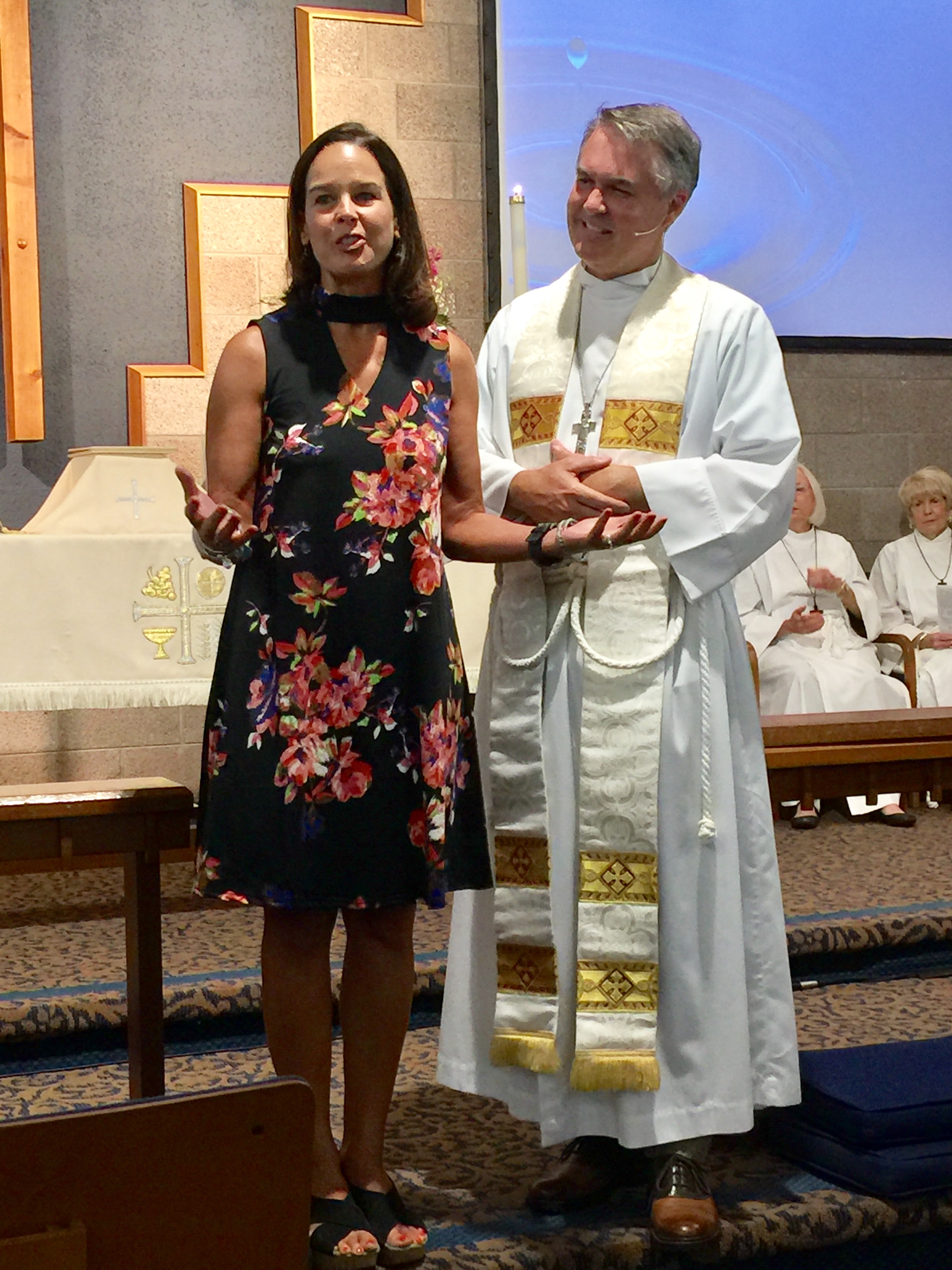
Brooke’s remarks at St., Peter’s

At the conclusion of the sermon you will hear the remarks and congregational prayers, by Brooke Holt (my wife), John Ricci, (Senior Warden) and The Rev. Canon Justin Holcomb (representing Bishop Gregory O. Brewer).

Joshua 1:5b-9

“Just as I was with Moses, so I will be with you. I will not leave you or forsake you. Be strong and courageous, for you shall cause this people to inherit the land that I swore to their fathers to give them. Only be strong and very courageous, being careful to do according to all the law that Moses my servant commanded you. 

Do not turn from it to the right hand or to the left, that you may have good success wherever you go. This Book of the Law shall not depart from your mouth, but you shall meditate on it day and night, so that you may be careful to do according to all that is written in it. For then you will make your way prosperous, and then you will have good success. Have I not commanded you? Be strong and courageous. Do not be frightened, and do not be dismayed, for the Lord your God is with you wherever you go.”

Announcement: A New Ministry Call

From St. Peter's, Lake Mary to St. John the Divine, Houston

Below is my letter announcing my call to St. John the Divine Church in Houston, TX:

29 June 2017

Dear St. Peter’s Church Family and Friends,

Grace and peace to you through God our Father and our Lord Jesus Christ.

After a full and fruitful ministry of experiencing and sharing the joy and love of Jesus Christ with you, I am announcing my resignation as the Rector of St. Peter’s Episcopal Church. My last Sunday with you will be August 13, 2017—exactly 16 years. I have accepted the call to be the Associate Rector focused on teaching and formation at St. John the Divine Episcopal Church in Houston, Texas.

These years with you have been a grand venture in faith. We began our time together in grief as the nation faced the horror of the September 11, 2001 attacks. As a nation, we went to war against terrorism. As a church, we strengthened our faith and resolve in Christian witness knowing that while our country responded in war with military might against the ‘evil doers’ who caused such harm, we engaged in spiritual warfare with spiritual might against the forces of hell itself.

And I tell you, you are Peter, and on this rock I will build my church, and the gates of hell shall not prevail against it. –Matthew 16:18

Beloved of St. Peter’s, you are the Rock. Your faith and confession in Jesus Christ is rock solid. I have been continually amazed at how the Lord has used you to tear down the gates of hell. You have engaged in gospel mission to Honduras, hurricane relief in Pass Christian, MS, homeless ministry in Sanford and evangelism and Christian formation in Lake Mary, FL. God has been and is doing great things in and through you to bring about the reign of the Kingdom of God in our time. It has been my privilege, honor and love to be your Rector standing with you in faithful confession on the rock of Jesus Christ our Lord and Savior.

So, in mid-August, my son Chase will be heading off to college at Palm Beach Atlantic University. Brooke, Ashton, Saxon and I will be moving that week to Houston. St. John the Divine has envisioned what they call an “audacious strategy” to develop a “world-class teaching center for faith formation and ministry development”. This is a very exciting challenge for me to serve with my spiritual gifts and calling. The Lord is doing great things, and we are humbled and privileged to be invited to serve in this new context.

I ask for your prayers in this transition and please know that you will always continue in my heart and prayers. I have nothing but gratitude and love for all of you and for God’s abundant life of grace with which we have communed together. We are truly blessed by you.

I am faithfully yours in Christ Jesus our Lord,

Charlie Holt+

Sermon: Mission’s Compassion

The Harvest Field

Every day we are surrounded by the Kingdom of God, but do we see it? The Lord would have us see the people of this world as he see them. May our eyes be opened and our hearts be turned to the reality of great harvest. We so often see people for what they can do for us. Jesus saw people for what he could do for them. Matthew 9:35-10:8

Listen here:

And Jesus went throughout all the cities and villages, teaching in their synagogues and proclaiming the gospel of the kingdom and healing every disease and every affliction. When he saw the crowds, he had compassion for them, because they were harassed and helpless, like sheep without a shepherd. Then he said to his disciples, “The harvest is plentiful, but the laborers are few; therefore pray earnestly to the Lord of the harvest to send out laborers into his harvest.”

And he called to him his twelve disciples and gave them authority over unclean spirits, to cast them out, and to heal every disease and every affliction. The names of the twelve apostles are these: first, Simon, who is called Peter, and Andrew his brother; James the son of Zebedee, and John his brother; Philip and Bartholomew; Thomas and Matthew the tax collector; James the son of Alphaeus, and Thaddaeus; Simon the Zealot,and Judas Iscariot, who betrayed him.

These twelve Jesus sent out, instructing them, “Go nowhere among the Gentiles and enter no town of the Samaritans, but go rather to the lost sheep of the house of Israel. And proclaim as you go, saying, ‘The kingdom of heaven is at hand.’ Heal the sick, raise the dead, cleanse lepers, cast out demons. You received without paying; give without pay.  (Matthew 9:35-10:8, ESV)


I am the Resurrection and the Life

The stage is set for a climactic revelation of Jesus’ glory through the resurrection of a dead man. The disciples are very much aware that a return trip to Judea could result in Jesus’ persecution and death by stoning. Jesus persists in His determination to return to Bethany in Judea because “Lazarus has died.” Jesus hints at some great sign He will perform “that you may believe.” Thomas has his doubts as he girds up to go and die with Lazarus (and Jesus).

The miraculous raising of Lazarus from being dead three days becomes not only a demonstration of Jesus’ divinity but also of His humanity. “Jesus wept” (11:35), is both the shortest verse in the Bible and perhaps the most profoundly compassionate. When He sees Martha and Mary, and Lazarus’ friends and family all weeping, Jesus is described as being “deeply moved in his spirit and greatly troubled.” Not only is Jesus acquainted with human sorrows and grief, He shares in them.

Jesus also is the one who can reverse human suffering and sorrow. One day, He promises to wipe away every tear from our eyes. In a display of the “glory of God” (11:40), Jesus calls a three-day-dead Lazarus to “come out!” (11:43)

Here, Jesus utters the fifth of His seven great “I am” statements.

Jesus said to Martha, “I am the resurrection and the life. Whoever believes in me, though he die, yet shall he live, and everyone who lives and believes in me shall never die. Do you believe this?” (11:25-26)

Jesus is God in the flesh; He is the great “I am.” Jesus wept.

He holds the power of life and death in His sovereign hands. He is the bread of life, the only one who deeply satisfies our hungers. He is the light of life who disperses falsehood and darkness. He is the source of living water who heals our hurts and quenches our deepest thirsts. He is the only gate which leads to eternal life. For, He is the Good Shepherd who lays down His life for the sheep.

Do you believe this?

Martha’s response was, “Yes, Lord; I believe that you are the Christ, the Son of God, who is coming into the world.”

What is your response? Do you believe this? Today in prayer, offer your “Yes Lord; I believe” to the Lord and Savior of the World.

Prayer: Lord Jesus, where else would we go? You have the words of eternal life. Yes, Lord; I believe that you are the Christ, the Son of God, who is coming into the world.


This post originally appeared on The Bible Challenge here.
Featured image: The Raising of Lazarus by Jean Jouvenet via https://commons.wikimedia.org/wiki/File:Jean-Baptiste_Jouvenet_-_The_Raising_of_Lazarus_-_WGA12033.jpg

The Sheep Hear His Voice

I am the Good Shepherd

Sadly, no matter what God does or says, there are certain people whose hearts are so hard to Him that they will never turn and believe. The root source of such hardness of heart can come from many places: prideful arrogance, greed, lust for vain pursuits.

So the Jews gathered around him and said to him, “How long will you keep us in suspense? If you are the Christ, tell us plainly.” – John 10:24

The question and statement at face value sounds like a genuine desire to know Jesus. But as we read deeper into the text we find out He already has told them plainly, and yet they did not believe. By the time we reach the end of John chapter 10, the same questioners are picking up stones to stone Him for blasphemy.

In the opening chapter of the Gospel of John, Jesus is identified as the Creator, the True Light that enlightens all people, the Word made flesh dwelling among us. And yet there is also this concerning line, “He came to that which was his own but his own did not receive him.” As we arrive at chapter 10 in the Gospel, we reach a point of climax with some of the Jews and Jesus. Never has there been a more clear confrontation of the deep rejection by unbelief that Jesus received from “his own.”

Yet in spite of those who do not believe, there are also sheep who hear His voice. They recognize the Good Shepherd. They know that the Good Shepherd would lead them through the valley of the shadow of death to still waters that revive the soul.

The difference between those who reject Jesus and those who hear His voice really truly comes down to matters of the heart. For the hardhearted, no amount of logical reasoning or displays of the power of God will convince them to give their lives to Jesus. But those who are the sheep of the Good Shepherd need only to hear His voice, and they respond by faith. Soften your heart and open your ears to the sound of the Shepherd’s voice.

My sheep hear my voice, and I know them, and they follow me. I give them eternal life, and they will never perish, and no one will snatch them out of my hand. – John 10:27-28

Prayer: Heavenly Father, you have promised that those who hear the voice of the Good Shepherd and follow Him will never perish but receive eternal life. Speak to my heart, guide me, open my life to receive the abundant life that you promise to those who follow the voice of the Shepherd. In the name of your Son our Lord, Jesus Christ, Amen.


This post originally appeared on The Bible Challenge here.
Feature image: The Good Shepherd 103 Bernard Plockhorst via https://www.flickr.com/photos/waitingfortheword/5691907434

Why a Donkey?

Jesus and Palm Sunday

So what’s the big deal about the donkey? Why did Jesus ride a donkey into Jerusalem? Why is this such a celebrated act for Christians on Palm Sunday?

It is called the triumphal entry. The scene of Jesus’ entry into the city of Jerusalem conveyed a certain anticipation that something important was happening. The details of the entrance were precisely choreographed and planned by Jesus himself.

The disciples were told to go to a precise location where they would find tied a donkey and her colt. They were instructed to “untie them and bring them to me. If anyone says anything to you, you shall say, the Lord needs them, and he will send them at once” (Matthew 21:2-3)

Interestingly, the disciples seem to accept these instructions without question. No one asks Jesus, “Now why are we doing all of this? Doesn’t this seem a little strange?”

Matthew, the writer of the Gospel, anticipates that the reader hearing the story read may be more than a little puzzled.

We who have heard the story anticipate that Jesus is a great leader who will bring hope and salvation. And yet the drama of a person riding on a donkey seems a little anticlimactic, and to put it bluntly, rather normal.

People ride into Jerusalem on donkeys on a daily basis. These were beasts of burden, farm animals. They were the work vehicles of the ancient world.

But the significance of the donkey is found in the fulfillment of an ancient prophecy which provides this interpretive key to understanding Jesus instructions and actions. It reads,

Rejoice greatly, O daughter of Zion!
Shout aloud, O daughter of Jerusalem!

Behold, your king is coming to you;
righteous and having salvation is he, humble and mounted on a donkey, on a colt, the foal of a donkey (Zechariah 9:9).

Matthew, the gospel writer, understands Jesus’ actions to be a fulfillment of a prediction made by the prophet Zechariah concerning the coming of the royal Messianic king to Jerusalem the capital city of Judah and Israel. The prophecy explicitly foretold that when the Messiah comes to usher in the age of restoration, salvation and peace he will enter the city riding on the back of a donkey and her colt.

Matthew doesn’t quote the entire reference from Zechariah. But, if we go back to the original prophecy we would have greater understanding of the reason for the donkey as opposed to some other means of transportation.

I will cut off the chariot from Ephraim
and the war horse from Jerusalem;
and the battle bow shall be cut off,
and he shall speak peace to the nations;
his rule shall be from sea to sea,
and from the River to the ends of the earth.

As for you also,
because of the blood of my covenant with you,
I will set your prisoners free from the waterless pit.

Return to your stronghold,
O prisoners of hope;
today I declare that I will restore to you double (Zechariah 9:10-12).

The donkey is a sign that the Messiah will come as an instrument of peace and restoration and not as an instrument of war and violence.

A Roman king would enter a city triumphantly riding in on chariot powered by a mighty stallion of war. His parade would be long, with battalions of troops with swords and spears, with chariots and war horses. In his train, would be the spoils of battles, trophies in the form of slaves and women captured in humiliation and defeat, treasures galore.

We still use the phrase of the hero riding in on a “white horse” to save the day or rescue the oppressed. Jesus rode in on a simple donkey to save the world.

Here we see the mystery and paradox Jesus intentionally established by his actions. Jesus would indeed ride into the city on the beast of burden enthroned on the praises of a mighty crowd of supporters. Jesus salvation comes through humility and humiliation. Yet would the crowds perceive just how low he would go for them.

The action was public and dramatic.

“Hosanna to the Son of David! Blessed is he who comes in the name of the Lord! Hosanna in the highest!” (Matthew 21:9).

The story describes how the “whole city was stirred up”. Those who were roused by the activity questioned others in the crowd, “Who is this?” And the crowd would respond,

“This is the prophet Jesus, from Nazareth of Galilee” (Matthew 21:10-11).

The question is left for us to answer. “Who is this?” We live in a world that marvels and celebrates the powerful and wealthy. Yes the king of the universe enters our hearts and lives, not with bravado and pomp, but through humble access.

As we embark on Holy Week, humble your heart. Jesus would gain lordship over your life. Submit pride of self to the Servant King. Walk the way of the cross with Jesus, take on his mindset, manifest his character and live his life. The path to true triumph is a humble road.

Let Brotherly Love Continue

A few things to remember these days...

Let brotherly love continue. Do not neglect to show hospitality to strangers, for thereby some have entertained angels unawares. Remember those who are in prison, as though in prison with them, and those who are mistreated, since you also are in the body. Hebrews 13:1-3

Abide in Brotherly Love

Continuous mutual love (brotherly love, Gk. phil-adelphia) anchors the heart in the life of Christ. He sacrificed for us as his brothers and sisters (Hebrews 2:11-12) therefore our continual sacrifice is to offer our lives and love to one another as the family of God. Our mutual love is an aspect of the “unshakable kingdom” which we are inheriting. As Paul reminded in 1 Corinthians 13, love is one of the three things that will “remain” after all else comes to an end. At the last hour, the only thing that will matter is our abiding relationship with God and one another. All else is secondary. Our love for one another is eternal; it continues forever; it never ends.

Do not forget to love the Stranger

There is a tension between the life of holiness and the life of love. They are not mutually exclusive; in fact, they are two sides of the same coin.  To “be holy” means to “be set apart”. Does that mean that hospitality to outsiders goes out the window? Are the boundaries to be set so strongly that the Christian should not even associate with strangers or non-believers? Xenophobia is the fear of the stranger. Often an “inside group” can be very concerned about an “outside” group or person. Their cultures and customs are often strange and perceived as a threat to identity and purity.

Quite the contrary, once we are secure in our own relationship to God through Jesus Christ, our identity in him and our manner of life, we can freely relate to the stranger with love (love for the stranger, Gk. philo-xenia). The call is to love and welcome the stranger with a posture of hospitality and grace. Inside the community of the church, the people of God are called to be holy in their relationships. However, we are to maintain a loving holiness that extends out beyond itself. In Jesus Christ, xenophobia is transfigured into philoxenia.

When we are focused on our own familiar relationships, it can be very easy to forget to look around and show care to the new person or the unknown visitor in our midst. As a pastor, I find it heartbreaking to hear from new members to the church how they visited other churches (or even ours sometimes) and no one said a word to them. They walked in and they walked out without so much as a greeting or any attempt to welcome. How do we perceive the stranger in the midst of our assemblies? What does it feel like to be the lone outsider with a group of insiders–can you relate?

The call to show hospitality runs deep in the story of Israel. Abraham is blessed by welcoming three strangers who turned out to be messengers of good news who spoke prophetically as the angels of the Lord.

The strangers and visitors in our midst may very well have been sent by God to bring some missing spiritual gift or to provide for a need where there is lacking. At one time, Jesus came as a stranger to this world, and those “who received him, who believed in his name, he gave the right to become children of God” (John 1:12). Do Christians have a unique role to play with respect to immigrants and foreigners in our country?

Remember the Prisoner and the Mistreated

If we are to not forget to show love to the stranger in our midst, we are to always remember to show love to Christian brothers and sisters out of our presence trapped in prison. In the days of the early church, one could become imprisoned for simply being a believer in Jesus Christ. Just as we see in parts of the middle east today. Christians were persecuted and mistreated for their insistence on singular personal allegiance to Jesus Christ. Many today are trapped in the persecuting prison of their own country, and they would seek refuge if they could.

The preacher exhorts that even though our Christian brothers and sisters are away from us, they are still connected to us as united parts of the body of Christ and the household of God. We must always remember them, pray for them, and if possible, help them.

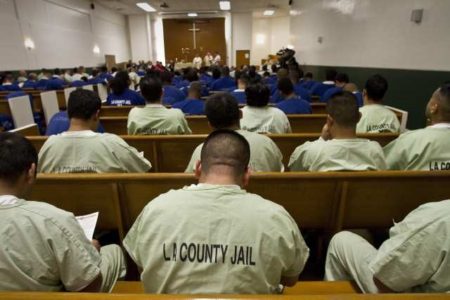
In 2013 the US Bureau of Justice Statistics reported that there 2,220,300 people in state and federal prisons, and county jails.

Christian Prisoners

Chapel Service in the LA County Jail

While it difficult to be exact, researchers estimate that there are between 50-60% of this population that identifies itself as Christian (either protestant or catholic). Jesus joined us in solidarity to our prison to Satan, sin and death:

Since, therefore, the children share flesh and blood, he himself likewise shared the same things, so that through death he might destroy the one who has the power of death, that is, the devil, and free those who all their lives were held in slavery by the fear of death. (Hebrews 2:14-15)

Our character of solidarity with brothers and sisters in Christ who are imprisoned or mistreated by persecution reflects the unity we share in Jesus Christ. He came to us when we were in prison. Jesus is the great liberator. When they are imprisoned, we are with them. When they are mistreated, so are we. We are one.

What is your experience of visiting the prisoner? How can the church more effectively care for our brothers and sisters in Christ behind bars? How can we better relate to Christian refugees and those who are persecuted for the Christian faith in other parts of the world?

Epiphany: The Big Reveal

Things into which angels long to look

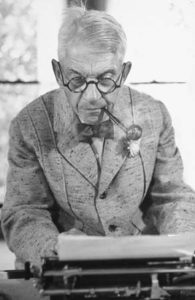
William Phelps taught English literature at Yale for forty-one years until his retirement in 1933.

William Lyon Phelps.
William Vandivert—Time Life Pictures/Getty Images

Marking an examination paper shortly before Christmas one year, Phelps came across the note: “God only knows the answer to this question. Merry Christmas.” Phelps returned the paper with this note: “God gets an A. You get an F. Happy New Year.”

In the Apostle Paul’s letter to the Church in Ephesus, he marvels in what he describes as the “mystery of God’s will”. A mystery is something that “God only knows”.

We all love a good mystery. Mysteries have tremendous power; the unknowns keep us engaged and drive us to seek a resolution to the mystery. As in any good mystery, with the big reveal, we learn who did it and how.

The story of salvation is in many ways an unfolding mystery. There are certain things that we know and have clues about from God’s revelations to Abraham, Moses, David and the Prophets of the Old Testament. God gave a lot of clues.

The Apostle Peter tells us that we now know things even the prophets and angels of God longed to see:

It was revealed to them that they were serving not themselves but you, in the things that have now been announced to you through those who preached the good news to you by the Holy Spirit sent from heaven, things into which angels long to look (1 Peter 1:12).

The people of old knew that God had a plan to save the world. They knew that central to the plan was the nation of Israel, and specifically a Messianic king who would be in the line of King David.

But, as Paul writes, there were certain things about the story of salvation that remained hidden in the councils of God until the big moment of revelation. The big reveal is called the Epiphany!

First: who? Who will be the Messiah? We now know that Jesus Christ, the incarnate son of God, is the one who will save the world. No one would have expected that a carpenter’s son from Nazareth would amount to much. Yet everything now points to him and his birth, ministry, death and resurrection.

The big reveal is that Jesus is the Way, the Truth and the Life, and no one comes to the Father except by him ( John 14:6).

How will God save the world? We now know from the big reveal that through the proclamation of the Gospel message about Jesus’ life, death, and resurrection, God will convert the hearts of the people of this world. He will liberate them from the powers of death and darkness, save their souls, and grant them eternal life.

As with any epiphany we can be surprised and shocked at the way things turn out. Who could fathom the sheer magnitude of the salvation of God as he converts the people of the world to Jesus? The Lord continues to surprise and amaze!

You and I have the tremendous privilege of knowing the big reveal to life’s most intriguing mystery. God has shown us how he will save this sinful and fallen world, and who has accomplished it. This is a revelation that is too important to keep hidden and secret. Our privilege, duty and calling is to make known the mystery of the will of God to a world that desperately needs to see the light of the Gospel.

Let your light shine!